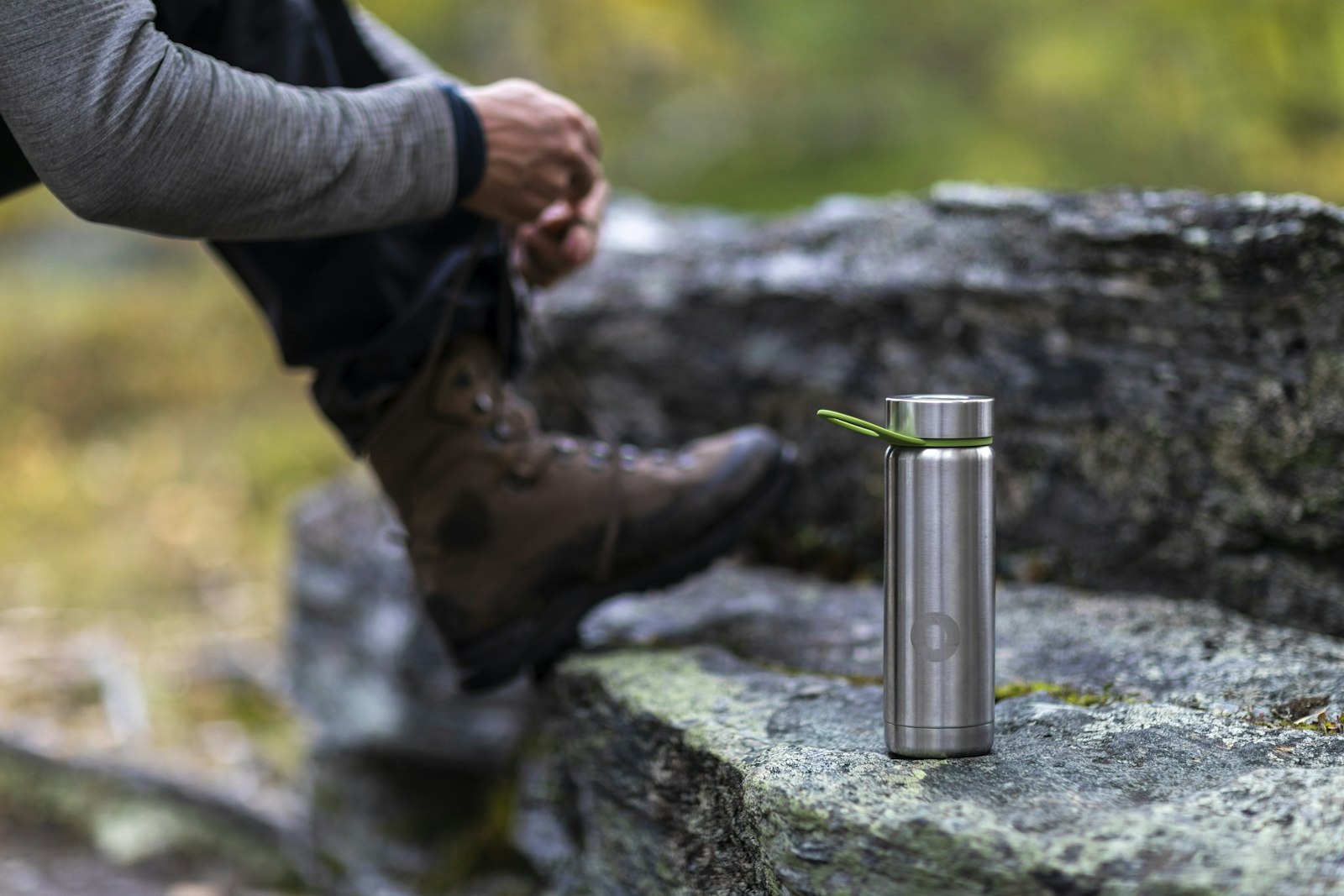
Reusable bottles come in steel, glass, silicone, aluminium and several plastics, and almost all of them are sold with reassuring labels. This guide explains what the common materials are, what the labels do and do not tell you, and how to choose one you will keep using.
About the word “non-toxic”. It is a marketing term, not a regulated standard. We use it here because it is what people search for, but the useful questions are more specific: what is the bottle made of, what touches your drink, and can you clean every part of it?
The main materials compared
| Material | Good for | Watch for |
|---|---|---|
| Stainless steel | Everyday carry, hot or cold drinks in insulated versions, rough handling | Heavier than plastic; can dent; lids often include plastic or silicone parts |
| Glass | Home, desk and car use; people sensitive to taste | Breakable and heavy; sleeves and lids are usually silicone or plastic |
| Silicone (collapsible) | Travel and small bags | No insulation; can hold on to flavours; harder to recycle |
| Reusable plastic | Light weight, low price, children’s bottles | Scratches and clouds with age; check the maker’s guidance on heat and dishwashers |
Stainless steel
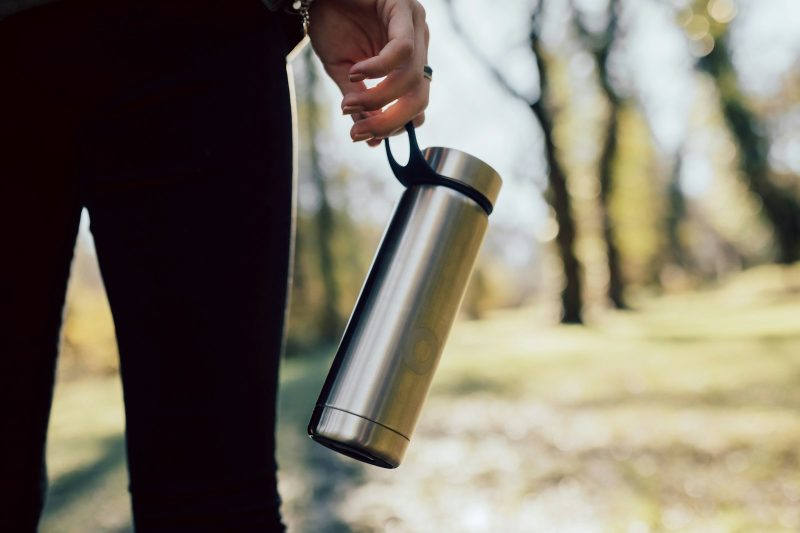
Most steel bottles are made from food-grade stainless steel, often described as 18/8, which refers to roughly 18% chromium and 8% nickel. Single-wall bottles are light; double-wall vacuum bottles keep drinks hot or cold for longer but weigh more. Look inside before you buy if you can: some metal bottles, particularly aluminium ones, have an internal lining rather than bare metal.
Glass
Glass does not affect taste and is easy to check for cleanliness. Borosilicate glass copes better with temperature changes than ordinary soda-lime glass, but neither likes being dropped. A silicone sleeve helps with grip and knocks.
Food-grade silicone
Collapsible silicone bottles fold or roll down when empty, which is handy for travel. Some brands describe their silicone as “platinum-cured”; that is a manufacturing detail we cannot verify for individual products, so treat it as a claim to check on the listing rather than a guarantee.
Plastic and “BPA-free” labels
“BPA-free” tells you that one chemical is absent. It does not tell you what was used instead, so it is not the same as a full list of materials. If you prefer to avoid plastic touching your drink, choose a steel or glass body and check what the lid, straw and seal are made of, because those parts are frequently plastic or silicone even on “plastic-free” bottles.
Three questions to ask before you buy
- What touches the drink? Body, lid, straw and seal can all be different materials.
- Can you clean every part? Wide mouths and removable seals are easier to keep clean than narrow necks and fixed straws.
- Can you replace the lid or seal? Spare parts can add years to a bottle’s life.
Looking after it
Rinse daily, wash with warm soapy water and a bottle brush, and let it dry fully with the lid off. Follow the maker’s instructions on dishwashers, especially for insulated or painted bottles. A bottle you find easy to clean is one you will keep using, which matters more than any label.
Ready to compare? See insulated stainless steel water bottles on Amazon, or read our stainless steel bottle guide.
Sources and further reading
- Bisphenol A (BPA), National Institute of Environmental Health Sciences — background on BPA.